Sunday, October 26, 2014

Astera's Wireless Specialty


There are many manufacturers and retailers for standard event lights. They come in varying qualities, with different effects and a myriad of features. But not all of your events will be for the standard wedding reception or corporate gig. You will always get those peculiar requests, and what do you do when you need to light up Machu Picchu or Stonehenge?

Maybe those examples are unlikely (probably impossible), but that is exactly what Astera wireless lights are designed for! Battery-powered, wirelessly-controlled, waterproof lights able to hold their charge for 8-20 hours (depending on effects/brightness) and make your setup a breeze!

So here are a few examples of what Astera specializes in and how to benefit from Astera lights:

BEACH LIGHTING
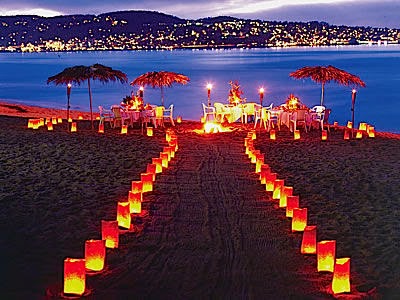
Astera lights are IP65 waterproof (see IP Ratings Explained) and have hard-wearing aluminium housings for the hustle and bustle of holding your event on the beach. But the main attraction is that you don’t need to lay cables from the nearest power point (which could be very far away). The AX3 Lightdrop™ is ideal for beach lighting because it's very bright and very small so it can be put inside objects (like in the image) for night parties. You just need to place it, press ON and you’re ready to light up the palm trees, the sand and the shellfish!

GARDEN LIGHTING


Much the same as beach lighting, Astera lights are waterproof and hard-wearing for garden lighting. We find an increasing number of weddings are being held outdoors nowadays, so the need for wireless lights is becoming more and more apparent. Trees, canopies, tents, brick work … you name it; it can be lit up hassle free with Astera’s wire-free LED event lights.


The added benefit with Astera lights is that if it rains, you don’t need to protect your lights because they are waterproof (check out this video), but if you’re an overly cautious event organizer, because Astera lights are wireless, you can easily grab them and put them under shelter.

HARD-TO-REACH LIGHTING

One of the biggest benefits is that Astera lights are small and not bulky like other lights, so they can be placed in areas up high or little nooks and crannies where wired lights would either not fit or would look hideous. Astera lights also come with clamps and rails to attach to many different surfaces. The AX3 Lightdrop™ even comes with a magnetic underside for attaching to metallic surfaces, which leads well into the next point…


SPUR OF THE MOMENT

Due to their completely wireless ability, Astera lights are ideal for adding extra accent lighting to an event when you feel something is lacking. It is also very convenient to move the lights around to test particular angles, effects or surfaces, and there is no need to move and lay cables with each adjustment. It is always handy to carry a few Astera lights with your lighting set up as they can help out tremendously when you are faced with problem areas and perhaps time is running out. Just whip out a few wireless lights and place them for quick illumination.

LIGHT UP FURNITURE


This applies just to the Lightdrop™ and the Wireless Pixel Tube, which were designed to be placed inside light up PE furniture (see image, right - also on the beach!). These plastic objects are ideal, once again, for outdoor events, and Astera lights fit perfectly inside where you can benefit from all the effects and ease of control as normal. When each object is part of a colour-sweeping sequence, it is quite breathtaking to watch.

TABLE CENTERPIECES

Tables need compact lights that can fit into larger structures/ornaments and that look clean and tidy. Not only are Astera's lights all of those things, but you can set different effect sequences to play between the tables. What would be a rather complicated procedure with DMX is simple with Astera's easy-to-use app. All settings can be changed at the flick of a hat, too. 


To get notified of new blog posts by Astera...


Astera LED Technology

Sunday, October 19, 2014

IP Ratings Explained

IP Ratings Explained


You have probably heard many manufacturers claim to have “waterproof” or “water-resistant” products, but what do these vague terms actually mean? Well, it’s not only you that has wondered this, so a system for identifying how waterproof an item is was created. That system is call the IP Code.


IP stands for International Protection (or Ingress Protection), and it is made up of two digits. Each digit refers to a different aspect of enclosure protection. The first digit refers to the level of protection against solid objects entering a device, and the second digit refers to the level of protection against water. For example, if a product is rated IP68, it is completely dust tight and can withstand complete and constant immersion in water, whereas if a product is rated IP00, it is basically an open product and has no protection against objects and water.


First Digit

Object size protected against — Effective against:

0 — No protection against contact and ingress of objects.
1 > 50mm — Large surfaces of the body, but no protection against deliberate contact with a body part.
2 > 12.5mm — Fingers or similar objects.
3 > 2.5mm — Tools, thick wires, etc.
4 > 1mm — Most wires, screws, etc.
5 Dust Protected — Ingress of dust is not entirely prevented, but it must not enter in sufficient quantity; complete protection against contact.

6 Dust Tight — No ingress of dust; complete protection against contact.


Second Digit

Water level protected against — Effective against:

0 — No protection against water
1 Dripping Water — Dripping water
2 Dripping Water — Dripping water when enclosure is tilted up to 15°
3 Spraying Water — Water falling as a spray at angles up to 60° from the vertical.
4 Splashing Water — Water splashing against the enclosure from any direction.
5 Water Jets — Water projected by a nozzle against enclosure from any direction.
6 Powerful Water Jets — Water projected in powerful jets against the enclosure.
7 Immersion up to 1m — Ingress of water in harmful quantity shall not be possible when the enclosure is immersed in water under defined conditions of pressure and time (up to 1 m of submersion).
8 Immersion beyond 1m — The equipment is suitable for continuous immersion in water under conditions which shall be specified by the manufacturer.  NOTE: Normally, this will mean that the equipment is hermetically sealed. However, with certain types of equipment, it can mean that water can enter but only in such a manner that produces no harmful effects.


So how do Astera products fare in terms of IP rating?


-----------------------------------------

Thanks for checking out our blog, and DON'T FORGET...


Astera LED Technology

Sunday, October 12, 2014

Wireless Light Accessories


The obvious benefit of wireless lights is that they are easily portable and attachable to pretty much any surface or structure in the event environment. Astera wireless lights were designed for just that. Applying to truss structures, walls, tables, rails, ceilings and many other structures is very easy with the new X-Series (especially the AX3 Lightdrop™).

Here is a breakdown of all the accessorizing options of the X-Series:


LIGHTDROP™ (AX3) - view product page


The Lightdrop™ has tons of accessories and plenty of uses.

Firstly, the Lightdrop™ can attach diffusors to alter the light spread from its standard 13° to a wider beam angle like 30° (for flood effect), 120° (for ambience spots), 17°x 46° (for wall wash effect) and a 270° diffusor dome (for inside translucent objects).

Secondly, it has a bracket for adjusting its beam when up lighting. But the bracket is also useful for attaching clamps for use with truss structures. The knobs on the bracket for adjusting its position are also useful for screwing in smaller clamps (for attaching to tables, rails etc.).

The Lightdrop™ can be attached to metallic surfaces without the need for clamps, as it has a magnetic underside, and for vertical suspension, it comes with 3 free hooks for screwing in to the back. Lastly, and referring back to the wall wash diffusor mentioned earlier, the Lightdrop™ comes with a tilt adjuster built into its housing, which means that it can be used as a wall washer with inclinations up to 13 degrees.


+++

SPOTLITE™ (AX7) - view data sheet

The SpotLite™ has very few accessories, but it’s no less impressive because of it. Diffusors are available which alter the beam angle, which is great for different types of event environment. The standard angle of the SpotLite™ is 13°, with a flood diffusors available at 32° beam angle, and a wallwash diffusor available at 17°x 46° beam angle (below).

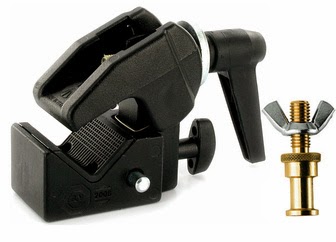
It can also be attached to truss structures with an 8mm threaded Manfrotto super clamp (right).


+++

SPOTMAX™ (AX10) - view product page

The SpotMax™ is just as accessorized as the SpotLite™. Diffusors are available which alter the beam angle, which is great for different types of event environment. The standard angle of the SpotMax™ is 13°, with a flood diffusors available at 32° beam angle, and a wallwash diffusor available at 17°x 46° beam angle (right).


It can also be attached to truss structures with an 8mm threaded Manfrotto super clamp (above). The SpotMax™ can be adjusted to change the angle of the head in a vertical direction.


Be sure to follow us on Facebook for more news, tips, and updates:


Astera LED Technology

Wednesday, October 8, 2014

Green Event Tips


The latest trend in event planning is how to make your events more environmentally responsible, but it has still not caught on as quickly as in other businesses, and many event organisers are still unaware of the ever-increasing need to make their events more energy efficient.

In order to achieve green events, organisers and designers will need to embrace new ideas. Events are not solely about the finances anymore. Key areas to target include travel, energy consumption, waste and recycling, and communication.


Let’s take the Glastonbury Festival in the UK as an example. They are tackling environmental responsibility with various schemes about green awareness, which is perfect for laying the foundation for their guests to take action. They have also implemented initiatives such as onsite composting, recycling (see above image), and water reservoirs, promoting public transport, and using solar energy where possible. The Glastonbury Festival also tackled transport. They set out to get a third of their attendees to attend via coach and train, and also promoted lift share and cycling, which significantly reduced the festivals carbon footprint.

That specific example does not translate so well to indoor events and gigs, but it sets a foundation as to what can be achieved when responsible action is taken. From a lighting perspective, things such as changing inefficient fluorescent tubes and show lighting to low-wattage LEDs and ensuring that lighting is turned off between rig-checking and show time are good ways to begin. Here are our top tips for making green events:

Recycle – Install recycling bins next to your trash. Event companies can use huge amounts of paper, whether it is answer sheets or invitations or pamphlets, if they are no longer needed, put them in the recycle bin, not the trash.

Use Technology – Try to make your communication with guests and clients as digital as possible. Everyone is connected these days, so there really is no need being old-fashioned and using needless amounts of paper.

Transportation – Less vehicles on the road is always a good thing, and you can help by providing your attendees with a green transportation option: think shuttle bus to/from the venue from the airport or hotel, etc. You can get creative here.


Outdoor Events 
This isn't always viable, but the truth is that venues waste a huge amount of energy on heating and/or air conditioning. If you are committed to creating responsible events, limit the amount of energy you are using on providing indoor comfort by offering an outdoor option, which requires neither heating nor air conditioning. Most technologies are wireless nowadays, so there really is no excuse for not holding events outdoors, and depending on the weather, you (and your guests) will appreciate it.


How do you make your events more green?

Feel free to comment below!


Astera LED Technology

Sunday, September 28, 2014

What's CRI All About?


The CRI refers to the Colour Rendering Index (sometimes referred to as Colour Accuracy). This is the level to which a light source can duplicate colors produced by a reference light source (usually the sun). It is measured as a number between 0 and 100. A light fixture with CRI of 100 means that colours will appear exactly as they would under normal midday sunlight conditions, like an incandescent or halogen bulb.


A CRI of 80 means that the LED light bulb is replicating 80% of the visible color spectrum that the sun would produce at the same colour temperature. A CRI of 100, taken at a colour temperature of midday sunlight will exactly reproduce the colours found on a sunny day at noon. A CRI of 50 taken at midday sun will somewhat reproduce the colours when compared to that of a normal midday sunlight.

Some manufacturers (in a bid to attain a CRI of 100) use a non-midday colour temperature as their source CRI, therefore when calculating the CRI of their fixtures; it appears higher than it actually is (and therefore more impressive).


Currently (using the midday Sun as our light source) Astera’s SpotMax™ can achieve a CRI of approximately 87, which is incredibly high for a wireless, RGBAW fixture. A CRI of between 90 and 95 is achievable with an LED light source, but as yet is not commercially available.


Be sure to follow us on Facebook for more news, offers, and tips:


Astera LED Technology

Monday, September 22, 2014

Let's Talk Uplighting

Let's Talk Uplighting


As the name suggests, uplighting is the art of using light (in an upwards direction) to wash your walls with colour, and in the process turn a plain and unexciting venue into a buzzing and colourful event.

LED or Traditional PAR Can?

There are many benefits to using LED lights compared to traditional PAR cans for your uplighting. The main attraction is that LEDs use much less power than traditional bulbs, and they rarely overheat or pose a fire hazard. Their color, effects, settings and brightness can be wirelessly changed as and when it is needed, as opposed to traditional PAR cans, which need their filter gels changed each time you wish to illuminate in a new colour. LED lights also do not require a bulky and time-consuming DMX controller to switch them on or off. Instead, LED lights come with various forms of remote control and most are fitted with Wireless DMX capabilities.

The main drawback to using LED lights is that it’s more expensive, but that is much less of an issue now than it was before due to the high demand for LED event lighting. Another drawback was that LEDs were not as bright as traditional PAR can lights, but that is also no longer the case.

Photo credit: Paul Singh, Midwest Sound

Wired LED Uplighting or Wireless LED Uplighting?

Most of the options for uplighting currently on the market are wired solutions. These have been in production for many years and users are very familiar with these lights (controlled by DMX and connected to the mains). They are bright, rigid, cheap and long-lasting. For the traditional and price conscious DJs and event designers, these are perfect. However, there are also wireless options available. This is a technology with much less history and with fewer options available.

The benefit of wireless lighting over wired options is the set-up time and the event aesthetic. In general, it takes considerably less time to set-up events with wireless lights, and with that comes the need for less man power. For modern, price sensitive, shrewd business owners, while initially more expensive, wireless lights definitely pay off very quickly due to the cost savings in other areas. Not to mention the impact wireless lights will have on your event. Without cables in show, running along walls, hanging from ceilings etc., events can look clean and tidy and really make a professional impression on your clients.


Types of Uplighting

Simplifying the topic, it is possible to make two categories for uplighting. Each category uses the light and effects differently to elicit different moods and reactions from your guests.

Ambient Uplighting

Ambient uplighting is used with the aim of improving the graceful atmosphere of a room or event. With this type of uplighting, the lights are being used to complement the space, create an aura, and not as a glitzy performance in and of itself. Generally, ambient uplighting is characterized by its use of static colours (you pick one color and it stays the same for an extended period of time) or multiple colours but with very little movement (remember, the idea is to create mood, not excitement). There are also different types of ambient uplighting. To light up a pillar or a piece of furniture is typically to use accent lighting (to accentuate the object), but to paint a wall with colour is to use mood lighting.

Flashy Uplighting

Flashy uplighting is intended to provoke the senses of the crowd and get noticed. Typically, events that wish to have a temporary dance floor will make use of flashy uplighting with lots of movement, different effects, frequently changing colours, and even possibly a strobe effect.

Both types of uplighting are difficult to achieve but both are very successful when correctly utilized. Uplighting can be used at any venue where you feel a mood needs to be set, but you will most likely see uplighting at wedding receptions, corporate events, and other celebration parties.


Thanks for checking out our blog!


Astera LED Technology

Monday, September 15, 2014

Wireless Weddings

Wireless Weddings


How can wireless lighting benefit weddings? Does it make sense to use wireless lighting, which is typically more expensive, for your clients’ big day? Here is a list of the advantages of wireless weddings:


TABLE CENTERPIECES

Every wedding has large tables, and that requires stunning centerpieces. With wireless lighting, you can place a colour-changing ornament in the center, which can also be synched with all the other tables to change colour and effect at the same time. Furthermore, this is only really plausible with wireless lighting since it’s seamless and doesn’t require cables, which can look hideous on a day where everything must be perfect.

Recommended Astera Products: AX3 Lightdrop™ and AL3-S MiniLightdrop™

These two products are small, compact and have long battery runtimes. They can be used with Astera centerpieces (bubble stick and small spheres) or be built into your own construction. No cables, and being very small, make this a possibility. The great thing is that you can just use the AX3 and place a clear glass vase on top and “hey presto!”… You have a nice and quick centerpiece.


QUICK SET UP

Since wedding venues are usually only rented for one day, there is always a mad rush to get everything set up and rigged in time. This is where wireless lighting can help tremendously. Less cables means less staff needed to lay the cables, transport equipment and to maintain/program the equipment to play desired effects. Saving time means you need less rental time, and also less pack-up time. These are all going to impact your profit margins, whether you’re a mobile DJ or a fully-fledged event company.

Recommended Astera Products: AX7 SpotLite™ and AX10 SpotMax™

These lights not only have tons of effects to choose from, with lovely rich colours, they are also waterproof which is ideal for outdoor weddings in places where there are no power outlets (on the beach, for example). Furthermore, wireless lights can constantly be tweaked and moved within seconds to find the optimal angle for illumination (for example, when lighting up trees and buldings).


FLAWLESS APPEARANCE

Much the same as the two previous benefits, but when lighting up walls with wallwasher fixtures, cables are even more prominent and they really restrict the movement you can apply to each fixture. For wired set ups, cables are sometimes covered (which takes time) or they are left to be seen (which looks ugly), so when moving a fixture the cables will be disrupted and it takes even more time to conceal them again. With wireless lights, none of these issues are present.

Recommended Astera Products: AL6-M and AL6-L Wallwashers, AL7-XXL and AX10 SpotMax™


Not only are they wireless, they also come in white for weddings, which allows the lights to fit seamlessly into the overall event aesthetic.


Feel free to leave comments below!


Astera LED Technology