Monday, November 30, 2015

How to Care for your Astera Battery?


Let's start off with a little history;  Astera batteries were not always as reliable as they are now.  We used to use Lithium Cobalt (LiCo) mixed cells.  These were serviceable, good even, but not GREAT.  Now, we use Samsung SDI batteries.  And they are GREAT.

So, how do you care for your Astera battery?  How do you prolong its life?  How do you ensure that you are getting the very best out of the quality components inside our fixtures?

When you receive your fixtures, they should be fully charged.  But check this to make sure.  There are a few guidelines to follow as an end user:

1. Charge your fixtures immediately after use.
2. If putting them into storage, make sure they are fully charged, not empty.
3. If in storage for longer than 3 months, make sure you recharge your fixtures.


Our batteries will be at 70% capacity after 300 full discharge cycles.  That means that after 300 times of your battery being completely filled up and then completely drained, your battery will still have 70% of its original capacity.  Now, most likely users will not completely drain the battery before recharging - on average it will be at 30%-70% before people recharge - therefore your battery will probably last much longer, especially if you care for your battery with the above guidelines.

As for the charging time of our fixtures; you can usually fully charge a fixture within 5 hours.  However, there are exceptions; if your fixture is hot (greater than 45°C) it will not charge as quickly (can be up to 20 hours).  If you require fast-charging, make sure you wait for the fixture to cool down before starting the charging process.  It may also take longer if you are charging your fixtures while using them (they may not even charge at all!).  It is important to know that if you don't have 5 hours before an event, the batteries are designed to add charge quickly in the first two-thirds of charging time, and slower in the final third.  So, you could charge your fixtures for 3 hours and still get it up to 75% full.

The most helpful thing to know for end users is how to use your fixtures in an economical way so as to prolong its runtime/battery health.  How to get the most out of the battery so that your fixtures are not completely drained each time (which greatly increases the charging time).  Well, we have a few features that you can use:

Minimum Runtime
This is a feature that allows users to set the runtime to match the length of their event.  If your event is 8 hours, and you need 1 hour for setup, set the runtime to 9 hours and the fixture is then guaranteed to last for your entire event, and most likely even longer (remember, it is Minimum Runtime).  The light will adjust its intensity to make sure it has enough juice to last for the full 9 hours.  Set it to 20 hours, and it will adjust itself to ensure it lasts for 20 hours.  This is especially good because if you have a long event and you just have the Master Brightness at 100%, the fixture may lose power half-way through.
Minimum Runtime / Standby Mode
via AsteraApp™

Standby Mode
Many users charge their fixtures, arrange set up, and then set all fixtures to black in preparation for an event.  But this is wrong.  The blackout function is only intended for short-term intervals of non-use (up to a few hours).  The correct (and more economical method) is to use Standby Mode.  What happens when Standby is activated is the output is switched off, the CRMX receiver is powered down, and the fixture enters a state of low power consumption.  There is no constant link between your fixture and the controller, therefore it consumes much, much less power.  For example, the Lightdrop™ will last approximately 3 days in Standby Mode, and the SpotMax™ will last 20.

Colour Use
Not strictly a feature, more of a tip, is to prolong your runtime by choosing your colours wisely.  White, for example, will not give you as long of a runtime as Red or Green or Blue. We know this is not always possible when a client demands specific colours, which is why we recommend using the Minimum Runtime feature explained above.


If you have any further concerns about batteries or charging, do not hesitate to contact us via our website.


Be sure to follow us on Facebook for news, tips, images, competitions and other updates:


Astera LED Technology

Tuesday, November 3, 2015

Astera Makes Wireless History


Kaiser Showtechnik GmbH, our exclusive distributor for Germany, illuminated the New Schleissheim Palace in Munich on 25th August 2015.  The setup, stretching more than 300 metres along the palace façade, was “100% Wireless” and the largest of its kind to ever take place – using over 600 wireless Astera fixtures.  The project made use of and fully showed the capabilities of our long-distance RF technology found within the AsteraBox™ and AsteraApp™, as well as LumenRadio's PLASA Award-winning CRMX Wireless DMX capability (integrated inside all X-Series lights), which has been integral to the industry’s acceptance of Astera as the standard for wireless lighting.

The production was to mark the beginning of our recently announced partnership with Kaiser Showtechnik, who produced the video, and their investment in marketing Astera for the German-speaking market.  A 14-man production crew was brought in to organise the project and capture the beautiful effects, brought to fruition by lighting designer, Chris Schatz.  The footage was then compiled and edited by CorneliusFilms.

The video can be seen on Astera’s Facebook and YouTube pages.

Commenting on the video, Sebastian Bückle, Sales & Marketing Director at Astera, said, “We’re delighted with the video.  Finally the industry can see our lights for their intended purpose.  The scope and power of the Astera system, as well as the technical ability, are on full show, and we couldn’t be happier with the result.”

The AX3 Lightdrop™; a 15W wireless, multi-use spotlight, was brought in to up-light all 150 window ledges, while the AX7 SpotLite™; our 60W wireless all-rounder, fitted with 30° diffusor sheets, was utilised as a building uplighter and garden illumination, and finally the AX10 Spotmax™; the most powerful wireless spotlight on the market, also fitted with 30° diffusor sheets, was used as a floodlight to add the finishing touches to the colourful event.


Astera develops and manufactures the brightest and most compact wireless spotlights on the market.  Based in Germany, Astera has a complete arsenal of high-end lighting solutions from small and versatile ambient fixtures to more powerful flood and spot lights.


Click the image below to follow us on Facebook for tips, tricks, and news:


Astera LED Technology

Monday, November 2, 2015

TIP: Confirm Your Astera Lights with an ARC1

The ON button on the IR Remote (ARC1) has the exact same function as either the ON button on the AX3 or the ENTER button on lights with an LCD.  It confirms things.

It is extremely useful if, for example, you wish to factory reset twenty AX10 or AX7 at the same time; you just use the 'Lights Factory Reset' feature within the app, and when your lights are flashing white waiting for you to 'confirm' the reset by tapping them, instead you just press ON with the IR Remote a few times and you are done – everything should be confirmed.  No need to bend down and confirm each AX10 or AX7 individually (which can take forever!).


Use A to activate reset, B to confirm.  No need to touch C at all.

You can also use this IR function to confirm lights as part of a set, however this is more likely that you will include lights into the set that you perhaps did not intend to, so the IR Remote needs to be pointed directly at the lights you wish to confirm.

Note:  This has worked for all Astera lights since 2010*.  It's just one of those hidden tricks that hasn't been promoted (until now) because it got lost in the shuffle of other great benefits to our system.  

* It does not work for all AL6 Wireless Wallwasher fixtures because they do not have an IR receiver.


Be sure to follow us on Facebook for news, tips, images, competitions and other updates:


Astera LED Technology

Monday, June 8, 2015

Astera's Wallwash Diffuser

Many customers are intrigued by the X-Series wallwashers. We have wallwasher diffusers for our AX3 Lightdrop™, AX7 SpotLite™, and the AX10 SpotMax™.


With the X-Series having a wallwash diffuser, it replaces the need for a fixture dedicated to solely wallwashing (an AL6-M, for example). Adding the wallwash diffuser (AX3-WWDSK) to an AX3 Lightdrop™ instantly transforms it from a spotlight into a wallwasher, and it really does wash a whole wall with colour (much more than the AL6-S or AL6-M can achieve, see below).

(CLICK TO EXPAND)

Just by adding a plastic diffuser, the AX3 Lightdrop™ produces a nice even wash of light, compared to the AL6-S or AL6-M which has a floor-facing arc and only illuminates vertically. The 17° x 46° elliptical diffuser makes the X-Series a much more viable option for wall lighting because not only does it produce a desirable effect, but there are multiple other uses to the lights. The AL6-M is almost twice as expensive as the AX3 and the illumination is much worse.

The wallwash diffuser is an elliptical plastic sheet. Up close you will see that the diffuser has a grid-like effect, which allows the light to evenly pass through and illuminate a wider area, as opposed to the direct vertical beam of traditional wallwashers. As you can see below (AX3 Lightdrop™ with a wallwash diffuser), if you turn the light, the direction of the beam will be tilted.

(CLICK TO EXPAND)

So when this is used as an up-lighter, the light is horizontally longer, and therefore spreads more effectively over the surface of a wall etc. 

Tip: To wallwash; rotate the diffuser so it emits light as in the top left image, but to light up columns; rotate the diffuser so it emits light as in the bottom right image. This highlights an additional benefit that traditional wallwashers cannot possibly achieve.


Be sure to follow us on Facebook for news, tips, images, competitions and other updates:


Astera LED Technology

Sunday, January 11, 2015

The History of the Lightdrop™


For those of you that have been following Astera since the beginning, this will be a nostalgic look back, but for those new followers, here's a look into the evolution of a product line.

Astera's most famous and versatile product didn't always look like the ultra-cool and capable light that it does today. More than 5 years ago, development began on our first wireless spotlight from technology used in previous projects by our owner, Norbert Ernst. The Lightdrop™ has had many makeovers and features added (in fact, it didn't even start off as a "Lightdrop"), so this is how it all began...


Check out the newest AX3 Lightdrop™ below:


For more details and a product specification, click here.


---------------------------------------------------------------------------------------------------------


Be sure to follow us on Facebook for more news, offers, and tips:


Astera LED Technology

Sunday, December 7, 2014

A Few Things About Wireless DMX


There are so many DMX standards for making lights wireless. It seems that every small lighting company has their own version, whether it’s Wireless DMX, Wi-Fi, Wi-Fly, WiCICLE or some other variation on these, there seem to be many options on the market. But what is the best to subscribe to?


Well, the most well-known (and most used) wireless standard is W-DMX from Wireless Solutions. Many lighting manufacturers make their fixtures compatible with this standard, and thus it is the safest and most popular option to choose.


However, Astera offers a more stable and reliable wireless DMX solution by partnering with Lumen Radio. Astera fixtures are fitted with a small CRMX chip, which means that users can control our lights with Lumen Radio’s wireless DMX transmitters (such as the CRMX Nova TX), which are secure, wide-reaching and even waterproof. Lumen Radio transmitters are also compatible with W-DMX from Wireless Solutions, so this solution truly is the best for future compatibility of the majority of fixtures, not just Astera lights.

Astera’s lights are now able to be used all around the world, whether it’s with our own RF system or with widely used wireless DMX standards. And if users have neither wireless DMX standards, our RF control system is foolproof and simple to use. Check it out here:


Be sure to follow us on Facebook for news, tips, images, competitions and other updates:


Astera LED Technology

Monday, November 24, 2014

3 Important Lighting Metrics: Explained


There are three promoted figures related to brightness of LED fixtures; LED power, Lux, and Lumen, and these are all related in some way but many LED lighting manufacturers mis-communicate the advantages of each.

LED Power

A high wattage LED power doesn’t necessarily mean a high brightness. It depends on the quality of the LEDs and the Lumen efficacy. A common assumption is that a 3W LED is brighter than a 1W LED, but this is often not the case as it depends on the quality of the LED, the beam angle, and the color range. Astera has very high power LED spotlights (up to 135W), but also manages to retain high brightness with its use of Philips and Cree LEDs.

Lux

Lux is the unit of measurement for luminous emittance (light emitted from a surface) and breaks down as the amount of Lumen per meter squared emitted from that surface. Many manufacturers quote a high Lux figure but they do not mention two important pieces of information;
  1. The distance of the light from the subject
  2. The beam angle of the LED light source.

As a consumer, these are needed in order to prove the brightness (and if these are not present, the manufacturer is probably trying to hide something).

In order to get an accurate Lux reading, an area of 1m² needs to have light shone onto it. For example; a light source with a 15 degree beam angle needs to be placed 4.3m away, and a light source with a 30 degree beam angle needs to be placed 2.1 meters away, for them to both cover an area of 1m². Pay attention to this when comparing Lux values as there are many tricks that manufacturers play.

Lumen


Lumen is the measurement of light and its sensitivity to the human eye. The Lumen scale describes the amount of light, or brightness, that the human eye perceives from a light source. Apart from straight-up lying, there is not much that manufacturers can mis-communicate here. It is measured using a light sphere and spectrometer. When a color is not stated, assume it is 6000K Cold White. Every manufacturer will use this as it gives them the best chance of getting a higher lumen value.


Click on the box below to:


Astera LED Technology

Sunday, November 9, 2014

The Mystery of Amber


Many lighting fixture manufacturers are now adding amber LEDs to their RGB or RGBW fixtures. The benefit of adding amber LEDs is improved color mixing and better color emittance from brown and orange surfaces.

For example, using an RGB light source to illuminate a brown surface with orange light will produce a red or reddish orange. Using amber LEDs will correct this issue, and an RGBA fixture will display orange as true orange regardless of which surface it is shone onto. Furthermore, having amber LEDs in your fixtures will produce nicer warm whites instead of RGB mixed versions, which can look fairly cool.

Nowadays, many weddings and corporate gigs feature gold, orange and peach as their main colour, and amber LEDs significantly help towards creating the ambience desired by the client. RGBA or RGBAW fixtures are much more expensive than the standard RGB fixtures, but it is generally worth it for the added benefits. For theatre and stage lighting, having RGBAW fixtures is a requirement as it helps with skin colours.


The SpotMax™ (AX10) features RGBAW LEDs. These LEDs are Philips manufactured and, as the AX10 can be used as a stage light and an event/DJ light; it really makes sense for it to feature the 5-in-1 ability.

We have already mentioned why it’s important for stage lighting to have amber LEDs, but it’s also very useful for DJs as it adds professionalism to their proposition. We have heard many times how having the added amber ability gives DJs and wedding organisers many more options in today’s very selective and demanding wedding market – and even though many brides choose colour schemes that an RGB set can reproduce, having a wider selection is exactly how they appeal to the more finicky, high-end weddings. It gives DJs the upper hand when comparing to just RGB fixtures.


Be sure to follow us on Facebook for more news, offers, and tips:


Astera LED Technology

Sunday, November 2, 2014

Benefits of TruColor™ Calibration


TruColor™ Calibration is the process of making all light fixtures consistent in terms of the colors emitted. This technology will allow all fixtures to produce the same color temperature regardless of batch or model.

Example: A user can choose 6000K White from an AX3 Lightdrop™, and then choose 6000K White from an AX10 Spotmax™, and both whites will be identical. The same applies to all colors and color temperatures.

Process

With TruColor™ Calibration, every single fixture is tested by a modified spectrometer which is attached to an integrated sphere, and every color is measured against the color index and adjusted accordingly. An extensive algorithm, written by Astera R&D specialists, automatically calibrates the brightness of each LED to ensure the fixture matches the standard index colors. Once the calibration is stored within the fixture, all fixtures from all batches will produce consistent colors. Astera has achieved complete color consistency. 

Currently, there are only a handful of companies that have similar technology, and thus, most other LED companies will deliver inconsistent colors.

Features

The difference between the colors of light produced in one batch of Astera lights compared to another is so minute that it is not noticeable to the human eye. Astera can produce any color in the color spectrum and can automatically match any color temperature.


With TruColor™ Calibration there are also dynamic power-boost and controlled-runtime features which support the application of the TruColor™ technology. Dynamic power-boost increases the power output of each light (making it brighter) while making sure the color point remains unaffected. Controlled-runtime is a feature designed to automatically adjust the brightness of each fixture to ensure optimal operation for any period set by the user.


Please use the comments section below if you have any questions regarding TruColor™ Calibration. Alternatively, you can contact marketing@astera-led.com


Astera LED Technology
Sunday, October 26, 2014

Astera's Wireless Specialty


There are many manufacturers and retailers for standard event lights. They come in varying qualities, with different effects and a myriad of features. But not all of your events will be for the standard wedding reception or corporate gig. You will always get those peculiar requests, and what do you do when you need to light up Machu Picchu or Stonehenge?

Maybe those examples are unlikely (probably impossible), but that is exactly what Astera wireless lights are designed for! Battery-powered, wirelessly-controlled, waterproof lights able to hold their charge for 8-20 hours (depending on effects/brightness) and make your setup a breeze!

So here are a few examples of what Astera specializes in and how to benefit from Astera lights:

BEACH LIGHTING

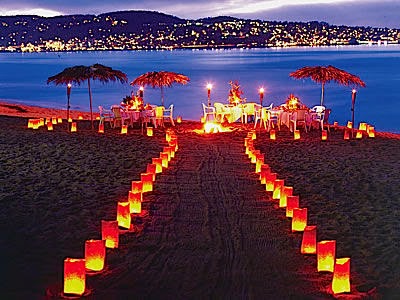
Astera lights are IP65 waterproof (see IP Ratings Explained) and have hard-wearing aluminium housings for the hustle and bustle of holding your event on the beach. But the main attraction is that you don’t need to lay cables from the nearest power point (which could be very far away). The AX3 Lightdrop™ is ideal for beach lighting because it's very bright and very small so it can be put inside objects (like in the image) for night parties. You just need to place it, press ON and you’re ready to light up the palm trees, the sand and the shellfish!

GARDEN LIGHTING


Much the same as beach lighting, Astera lights are waterproof and hard-wearing for garden lighting. We find an increasing number of weddings are being held outdoors nowadays, so the need for wireless lights is becoming more and more apparent. Trees, canopies, tents, brick work … you name it; it can be lit up hassle free with Astera’s wire-free LED event lights.


The added benefit with Astera lights is that if it rains, you don’t need to protect your lights because they are waterproof (check out this video), but if you’re an overly cautious event organizer, because Astera lights are wireless, you can easily grab them and put them under shelter.

HARD-TO-REACH LIGHTING

One of the biggest benefits is that Astera lights are small and not bulky like other lights, so they can be placed in areas up high or little nooks and crannies where wired lights would either not fit or would look hideous. Astera lights also come with clamps and rails to attach to many different surfaces. The AX3 Lightdrop™ even comes with a magnetic underside for attaching to metallic surfaces, which leads well into the next point…


SPUR OF THE MOMENT

Due to their completely wireless ability, Astera lights are ideal for adding extra accent lighting to an event when you feel something is lacking. It is also very convenient to move the lights around to test particular angles, effects or surfaces, and there is no need to move and lay cables with each adjustment. It is always handy to carry a few Astera lights with your lighting set up as they can help out tremendously when you are faced with problem areas and perhaps time is running out. Just whip out a few wireless lights and place them for quick illumination.

LIGHT UP FURNITURE


This applies just to the Lightdrop™ and the Wireless Pixel Tube, which were designed to be placed inside light up PE furniture (see image, right - also on the beach!). These plastic objects are ideal, once again, for outdoor events, and Astera lights fit perfectly inside where you can benefit from all the effects and ease of control as normal. When each object is part of a colour-sweeping sequence, it is quite breathtaking to watch.

TABLE CENTERPIECES

Tables need compact lights that can fit into larger structures/ornaments and that look clean and tidy. Not only are Astera's lights all of those things, but you can set different effect sequences to play between the tables. What would be a rather complicated procedure with DMX is simple with Astera's easy-to-use app. All settings can be changed at the flick of a hat, too. 


To get notified of new blog posts by Astera...


Astera LED Technology

Sunday, October 19, 2014

IP Ratings Explained

IP Ratings Explained


You have probably heard many manufacturers claim to have “waterproof” or “water-resistant” products, but what do these vague terms actually mean? Well, it’s not only you that has wondered this, so a system for identifying how waterproof an item is was created. That system is call the IP Code.


IP stands for International Protection (or Ingress Protection), and it is made up of two digits. Each digit refers to a different aspect of enclosure protection. The first digit refers to the level of protection against solid objects entering a device, and the second digit refers to the level of protection against water. For example, if a product is rated IP68, it is completely dust tight and can withstand complete and constant immersion in water, whereas if a product is rated IP00, it is basically an open product and has no protection against objects and water.


First Digit

Object size protected against — Effective against:

0 — No protection against contact and ingress of objects.
1 > 50mm — Large surfaces of the body, but no protection against deliberate contact with a body part.
2 > 12.5mm — Fingers or similar objects.
3 > 2.5mm — Tools, thick wires, etc.
4 > 1mm — Most wires, screws, etc.
5 Dust Protected — Ingress of dust is not entirely prevented, but it must not enter in sufficient quantity; complete protection against contact.

6 Dust Tight — No ingress of dust; complete protection against contact.


Second Digit

Water level protected against — Effective against:

0 — No protection against water
1 Dripping Water — Dripping water
2 Dripping Water — Dripping water when enclosure is tilted up to 15°
3 Spraying Water — Water falling as a spray at angles up to 60° from the vertical.
4 Splashing Water — Water splashing against the enclosure from any direction.
5 Water Jets — Water projected by a nozzle against enclosure from any direction.
6 Powerful Water Jets — Water projected in powerful jets against the enclosure.
7 Immersion up to 1m — Ingress of water in harmful quantity shall not be possible when the enclosure is immersed in water under defined conditions of pressure and time (up to 1 m of submersion).
8 Immersion beyond 1m — The equipment is suitable for continuous immersion in water under conditions which shall be specified by the manufacturer.  NOTE: Normally, this will mean that the equipment is hermetically sealed. However, with certain types of equipment, it can mean that water can enter but only in such a manner that produces no harmful effects.


So how do Astera products fare in terms of IP rating?


-----------------------------------------

Thanks for checking out our blog, and DON'T FORGET...


Astera LED Technology